Choosing the right concrete mix is one of the most important decisions for any replacement project in Castle Rock, CO.
Creteworx works with homeowners and property managers who need concrete that performs in Colorado’s demanding climate, where freeze-thaw cycles, soil movement, and moisture changes can quickly expose weak installations.
Understanding the difference between 1L concrete and traditional Type 1 and Type 2 cement mixes helps ensure a longer-lasting investment. While many assume all concrete is the same, the mix design directly impacts durability, sustainability, and performance. This guide explains those differences clearly, helping property owners make informed decisions that align with both structural needs and long-term value.
What Is 1L Concrete?
1L concrete refers to concrete made with portland-limestone cement (PLC), a newer alternative to traditional cement. The key difference lies in the inclusion of finely ground limestone, which reduces the environmental impact of cement production without sacrificing performance when properly designed.
This type of concrete has gained traction because it balances strength with sustainability. According to the Portland Cement Association, PLC “provides equivalent performance to ordinary portland cement while reducing carbon emissions.” That makes it a practical option for modern construction where environmental considerations matter.
For property owners in Castle Rock, the benefit is straightforward:
- Comparable durability when installed correctly
- Lower environmental footprint
- Suitable for
driveways,
patios, and
sidewalks
- Increasing adoption across the construction industry
However, the effectiveness of 1L concrete depends heavily on proper installation. Factors like
curing, water ratio, and subgrade preparation still play a bigger role than the cement label alone.
What Are Type 1 and Type 2 Concrete Mixes?
Type 1 and Type 2 refer to traditional cement classifications used for decades in construction.
- Type 1 cement is considered general-purpose and widely used for standard concrete applications.
- Type 2 cement offers moderate resistance to sulfate exposure and generates less heat during curing.
While these classifications sound technical, the real-world difference for most residential projects is often minimal unless specific environmental conditions require one over the other.
The key takeaway is that neither Type 1 nor Type 2 automatically guarantees better performance.
Concrete success depends on the full system, including:
- Proper base preparation
- Correct thickness
- Air entrainment for freeze-thaw resistance
- Strategic joint placement
- Proper curing methods
In Castle Rock, these factors matter more than the cement type itself due to extreme seasonal changes.
1L Concrete vs Type 1 & 2: Side-by-Side Comparison
Choosing the right concrete depends on your specific project needs, balancing sustainability with environmental performance.
Here is a breakdown of the three primary types:
- Type 1L (Portland-limestone) Concrete: This is a rapidly growing, eco-friendly alternative designed with a lower carbon footprint. When designed properly, its performance is comparable to traditional mixes, making it an excellent choice for both residential and commercial flatwork.
- Type 1 (Standard Portland) Concrete: As the traditional industry standard, this mix uses standard portland cement. It is a proven, reliable option for general construction and remains the most common choice for everyday building projects.
- Type 2 (Sulfate-resistant) Concrete: This situational mix is formulated with sulfate-resistant portland cement to provide better durability against specific chemical exposures. It is best suited for areas where soil or groundwater contains high levels of sulfates that could degrade standard concrete.
This comparison highlights a critical point: choosing the right concrete is less about which label sounds better and more about how the material is used in real-world conditions.
Why Concrete Mix Choice Matters in Castle Rock, CO
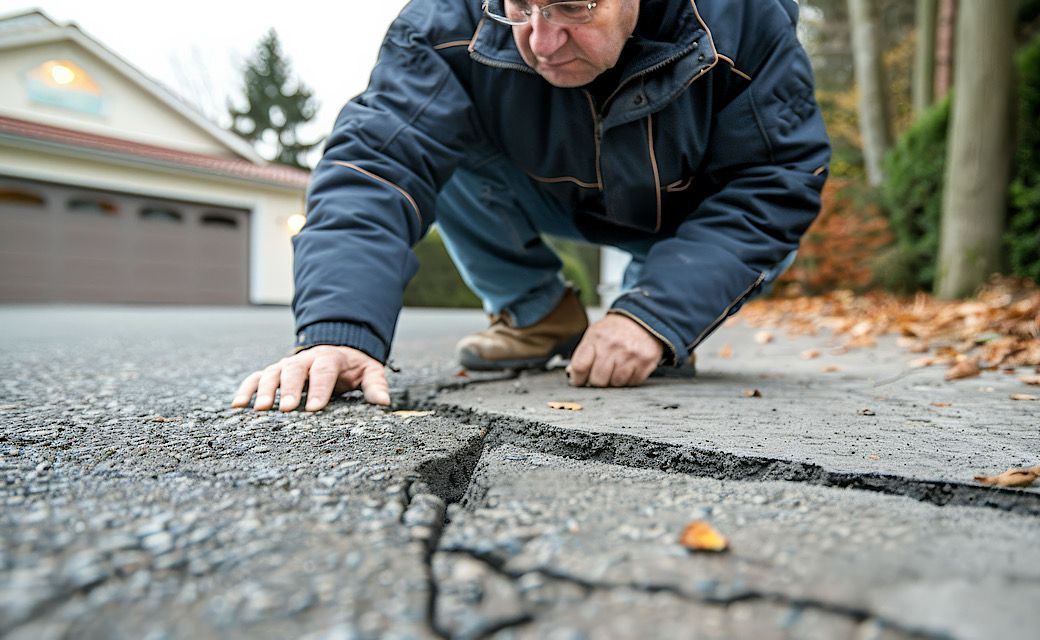
Castle Rock presents unique challenges for concrete. The combination of freezing winters, warm summers, and shifting soils means that poorly installed concrete can crack, settle, or deteriorate faster than expected.
The most important performance factors include:
- Freeze-thaw durability: Concrete must handle repeated expansion and contraction
- Drainage: Water should move away from the slab to prevent damage
- Subgrade stability: A poorly compacted base leads to sinking and cracking
- Surface finishing: Incorrect timing can weaken the top layer
According to the National Ready Mixed Concrete Association, proper air entrainment and curing significantly improve resistance to freeze-thaw cycles. This is especially important in Colorado climates. Property owners can also explore additional guidance on
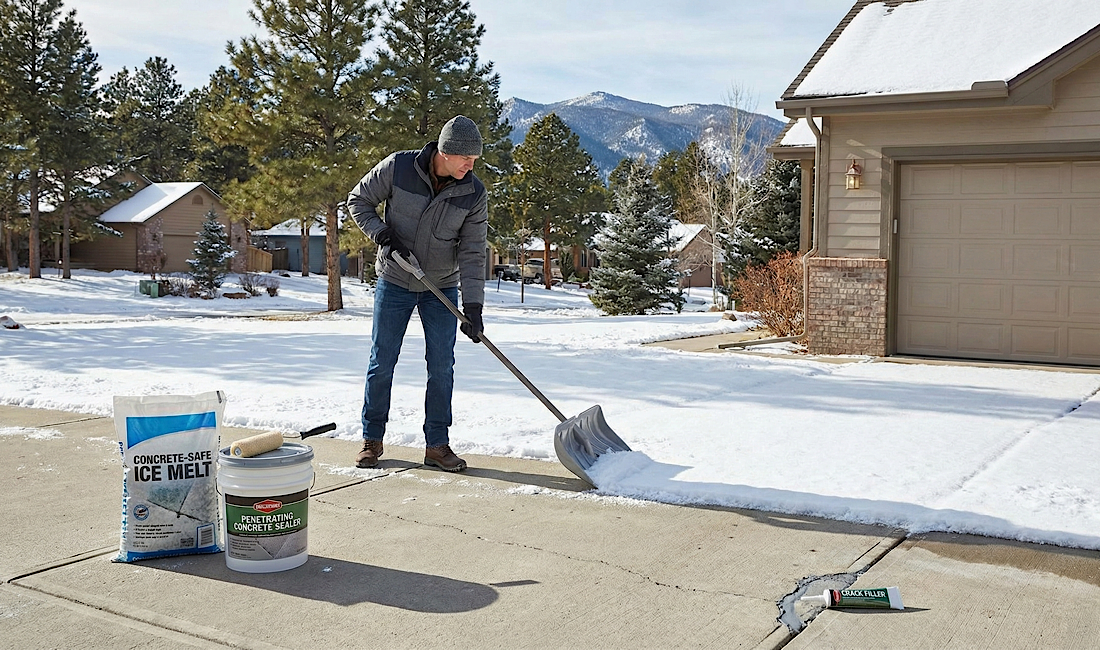
protecting concrete from freeze-thaw damage to better understand long-term durability.
For this reason, working with a contractor who understands local conditions is essential. Creteworx focuses on concrete replacement solutions designed specifically for Castle Rock’s environment, ensuring each project is built for longevity rather than short-term appearance.
Common Applications for Each Concrete Type
Understanding where each mix works best can simplify decision-making:
1L Concrete
- Driveways
- Patios
- Walkways
- Sustainable construction project
Type 1 Concrete
- General residential slabs
- Sidewalks
- Interior concrete
Type 2 Concrete
- Areas with moderate soil chemical exposure
- Foundations in specific conditions
- Select outdoor applications
In most residential replacement projects, both 1L and Type 1 can perform well when installed properly. The difference comes down to project goals, environmental considerations, and contractor expertise.
What Property Owners Should Prioritize
Rather than focusing only on mix type, property owners should evaluate the complete installation process.
The following elements have the greatest impact on long-term performance:
- Proper excavation and base compaction
- Reinforcement strategy (if required)
- Correct water-to-cement ratio
- Control joint placement
- Adequate curing time
- Drainage planning
A well-installed slab using the right process will consistently outperform a poorly installed slab regardless of whether it uses 1L or Type 1 cement.
Real-World Insight from Concrete Replacement Projects
Many property owners initially focus on visible results like smooth finishes and color consistency. However, long-term satisfaction often comes from what happens below the surface.
A common sentiment from concrete replacement projects is that durability matters more than initial appearance. Cracking, scaling, or settling typically traces back to installation shortcuts rather than material choice alone.
This reinforces a critical idea: the contractor’s expertise is just as important as the mix itself.
Frequently Asked Questions
What is the main difference between 1L concrete and Type 1 concrete?
1L concrete uses limestone in the cement blend, reducing carbon emissions while maintaining similar performance when properly designed.
Is 1L concrete strong enough for driveways?
Yes, when properly mixed and installed, it provides comparable strength and durability for residential driveways.
Which concrete lasts longer in Colorado weather?
Longevity depends more on installation quality, air entrainment, and curing than the cement type alone.
How can concrete cracking be minimized?
Proper base preparation, joint placement, controlled water content, and curing all help reduce cracking.
Work With a Concrete Contractor That Understands Castle Rock
Concrete replacement is an investment in safety, appearance, and property value. Choosing between 1L concrete and Type 1 or Type 2 mixes is important, but the real difference comes from how the project is planned and installed.
Creteworx provides concrete replacement services in Castle Rock, CO with a focus on durability, proper installation techniques, and long-term performance. Each project is tailored to local conditions to ensure the finished product holds up against Colorado’s climate.
For property owners planning a driveway, patio, or sidewalk replacement, now is the time to get clear answers and reliable guidance.
Contact Creteworx at 720-350-3503 to discuss your project and schedule an estimate.